Monday, 11 March 2013

The Small Back Room (1949)

THE FILM:
The Red Shoes was Michael Powell and Emeric Pressburger's greatest commercial success, and it put them in the position of making what ever suited their fancy.  They chose to adapt a novel by Nigel Balchin, they called it The Small Back Room. It was a complete 180 from their previous film. It was a study of one man, consumed by doubts and alcoholism, shot entirely in black and white, taking place mostly indoors during World War II.

They cast David Farrar, whom they had worked with on Black Narcissus, in the lead role. They cast Kathleen Byron, also from Black Narcissus, in the main romantic interest. The film was made on a small budget, and marked the beginning of Powell and Pressburger's decrease in popularity. It was well received critically, but it never found it's audience, and lurks somewhere in their forgotten films.

THE PLOT:
Sammy Rice is an expert on explosives living in London in 1943. He is an alcoholic, a trait he refuses to accept. His girlfriend Susan loves him, but he is constantly questioning their relationship, and he is never satisfied. One day, a man in the War Office brings him a new kind of bomb that the German's are dropping all over the country. He doesn't recognize the bomb, but he wants to be alerted if another was to be dropped.

He goes on wrecking his personal life, while more and more bombs are being dropped, and he begins to reach a crisis as political tensions in his department reach a boiling point.

THE CRITICISM:
You can separate Powell and Pressburger into two categories, Colour and Black and White. While their colour films can be fun, and flamboyant, it is their black and white films that truly exemplify their talent. Their black and white films tended to focus on  characters, rather than sets. The Small Back Room is one such character drama. It would have been perfectly suited to be a stage play (except for the bomb scene, but I'll get to that later), but the two directors manage to craft a fully functioning film.

Yet the whole thing rests on the shoulders of one David Farrar. Farrar did good work in Black Narcissus, playing second fiddle to Deborah Kerr's lead. Here, however, he truly gets a chance to shine. His Sammy Rice is a shadow of what he used to be, a nervous wreck. He keeps soldiering on, for King and Country, to watch while everything falls apart. Powell and Pressburger use a magnificent framing device. Every time Sammy goes to his apartment, there is a close-up on the keyhole. It's like every time he goes home, he drops his thin facade and truly becomes himself.

In one brilliant scene, Farrar is consumed by his need to have a drink, yet suddenly he becomes very small, and becomes crushed by a giant bottle. It is incredibly effective scene, showcasing the best work of Farrar's career, and the tension that is come to a boiling point later on. While the entire film is cliched, it actually uses the cliches to it's advantages. It spends little time setting up the characters, and you are left to base your understandings off your own knowledge.

However, Farrar may turn in the best performance of the film, but Kathleen Byron gives him a run for his money. Her character is made up of the oldest cliches in the book, but it just takes one look from her to crush them to the ground. She is outstanding. The rest of the cast turn in great performances, but I found all my attention going towards David Farrar and Kathleen Byron, and not to the supporting characters. There is however, one scene that stands out in particular. In it, Farrar goes to visit a dying soldier, to obtain information about a new type of bomb. The soldier is close to death, but he still tries to tell Farrar all he knows. It's a terrific scene.

The cinematography is wonderfully stark, and in glorious black and white. Pressburger's screenplay functions on all accounts. It provides emotion context, a great plot and a wonderful story arc. I'll take the time now to talk about the film's most famous scene. If The Small Back Room is remembered at all, it is for it's bomb defusing scene. The scene is incredibly thrilling, while providing an emotional climax for the film. In it Sammy is on his last string. He is drunk when he is called out to defuse a bomb. Someone else had tried it, and died in the process.

He arrives, tired and worn out, and decides to give it his all. The scene is incredibly harrowing, and easily the best of the film. There is one point where Farrar is puling on a lever. If he lets go, the bomb will explode, and he will die. He is pulling with all his life, as if concentrating all of his failures into this one moment, when he cannot fail. It is thrilling.

Powell and Pressburger direct with ease, trying something very different from their other efforts. Instead of spectacle and action, they focus on character, and it pays off. The film is not without flaw. It drags in some parts, and it contains cliches galore. However, in the end, it is nothing but an entertaining movie, if slight. It may not be their most well known films, but it it one of their best.

The Small Back Room,
1949,
Starring: David Farrar, Kathleen Byron and Jack Hawkins,
Directed by Michael Powell and Emeric Pressburger.
8/10 (A-)

Ranked:
1. The Life and Death of Colonel Blimp
2. The Small Back Room
3. The Tales of Hoffman
4. The Spy in Black
5. I Know Where I'm Going


The Spy in Black (1939)

THE FILM:
In 1939, Michael Powell was not a name anyone had heard of. Emeric Pressburger did not get credit as director, he was solely credited as writer. The Spy in Black is to Powell and Pressburger as Blacmail is to Alfred Hitchcock. They were both very small British films that set up great directors in their root to fame. The Spy in Black was created as a contract between the British government and the film industry  They were legally obliged to make pro-Britain films. These films were common in the beginning of Powell's career. Perhaps making pro-England films are what got him to his certain position. Therefor, this is an important film.

The Spy in Black is an incredibly hard film to find. Every print that is accessible is filled with audio problems. The print I had to watch had a 20 or so second delay in video from audio. Therefor, let us hope the film is picked up by Criterion or Kino some point soon.

Where does The Spy in Black currently stand? It has a 100% on Rotten Tomatoes and a 6.9 on IMDb. It is not The Archers best film in a long shot, or their most popular either. But it is a solid film.

THE PLOT:
Our story revolves around a man named Captain Hardt. He is a German submarine commander. He receives his orders one day and embarks on a travel to England where he is to make an attack. However, once he arrives there he meets a school teacher. Strangely enough, this teacher seems to know more than she should. But Hardt seems to be falling in love with her.

THE CRITICISM:
The Spy in Black is just filled with marvelous performances from every member of the cast. Conrad Veidt was perfectly cast in the role of Captain Hardt. He combines a somber respect for his duty with a devilish charm. Here we find Valerie Hobson in a strong performance as a female spy. She combines strength with her character along with the basic charm we have seen many times.

We have seen many film-noirs that are filled with clever twists in their writing. Although The Spy in Black is not officially a film-noir, it presumes the great plot and twists of one.

Here is an example of how budget, means nothing. Powell achieved a strong film than focused on cinematography rather than effects. Oh, and how the cinematography was excellent. This is stronger than most Powell and Pressburger films in that it demonstrates techniques that would seem foreign to them. Instead of using colour to create dream-like fun, they use black and white to create foreboding messages.

There is no fun in The Spy in Black. Not in the way that The Red Shoes is fun. This is a serious military film about undercover agents. I congratulate them on a mildly good film.

The Spy in Black,
1939,
Directed by Michael Powell
Starring: Conrad Veidt, Sebastian Shaw and Valerie Hobson
6.5/10 (C+)

Ranked:
1. The Life and Death of Colonel Blimp
2. The Tales of Hoffman
3. The Spy in Black
4. I Know Where I'm Going


I Know Where I'm Going (1945)


*The following review will contain spoilers. However, there are surprises in the film. It is very predictable and conventional like many films of its time*

THE FILM:
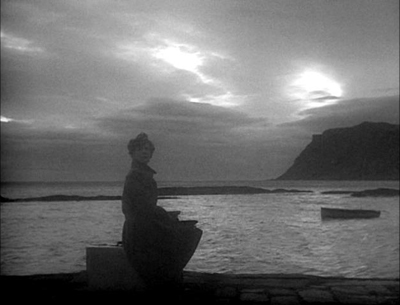
At this point, in 1945, Michael Powell and Emeric Pressburger had risen to fame around the World War II time period. They had created such successful films as 49th Parallel, One Of Our Aircraft Is Missing and The Life and Death of Colonel Blimp. They knew that the end of World War II was approaching so they decided to make more personal films, such as A Matter of Life and Death. However, in 1944 there was no available Technicolor stock to shoot with. This left Powell and Pressburger in a mind-boggoling situation. They desperately need to create a film in black and white, very quickly. Pressburger proposed the idea for a film about a young woman who tries to get to an island, but by the time she can, she doesn’t want to. Powell raised an eyebrow and asked “Why can’t she go?” Pressburger shrugged and responded with “Let’s make it to find out.”

After that began the production of one of Powell and Pressburger’s simpler films. The script was written in practically no time. When they arrived to shoot on location in Scotland, everything seemed perfect. It was in Scotland where they met up with the major actress of the time, Wendy Hiller. They thought she was perfect for the lead role of Joan Webster. In fact, it was in Scotland where Michael Powell fell in love with supporting actress in I Know Where I’m Going, Pamela Brown.

I Know Where I’m Going is an important film in the chronicles of The Archers (the nickname for Michael Powell and Emeric Pressburger). It was a film that represented the transition from World War II dramas to surrealist expressionist films such as The Red Shoes and The Tales of Hoffman. Where does I Know Where I’m Going currently stand? Well, it’s certainly far from being The Archers’ most discussed film, however it did survive the thunderstorm known as ‘time’, unlike some other films such as Oh, Rosalinda!!. I Know Where I’m Going currently holds a very high rating of 7.7 on IMDb. The best way to view the film would be on the Criterion Collection.

THE PLOT:
For all of her life, Joan Webster has known where she was going. She has always demonstrated exceptionally mature and intelligent behavior.  We meet up with her when she is in her early twenties. She meets with her father and divulges the news of her engagement to a rich Scottish lord. Her father tries to convince her to back down, but she is too self-reliant to listen to him.

After embarking on an expedition to Scotland she finds herself on a small isolated island across from that off her fiancé’s castle. It is then a problem arises. She seems to be trapped on the island due to extremely poor weather preventing her from sailing across to her fiancé’s castle. She somewhat-reluctantly surrenders to the isolated island across from her fiancé’s castle. It is there she meets a young naval officer named Torquil MacNeil. Much to her surprise, she finds herself falling in love with Torquil. This sudden romance that arises puts quite the wrench in Joan’s plans.

THE CRITISCIM:
When I say this I don’t mean it just for the pun… that’s just a benefit, but I Know Where I’m Going simply has no idea where it is going. There, I said. But the comment is truthful. We begin as a Lubitsch-ish. We then fade into a Preston Sturges-ish film. I have no problem with Sturges’ films, but I must admit it is a fair bit of a step down form Lubitsch. Then…  I Know Where I’m Going fades into a realm of utter clichés, conventional plot points and predictability. Allow me to elaborate. At the very end of the film, Joan is supposed to have left for the other island. Torquil is a state of mourning enters the gloomy premises of a cave he earlier stated he was opposed to entering. Suddenly Joan runs in, they embrace and walk off into the sunset. What I am attempting to explain is that I Know Where I’m Going goes from being a unique film about a headstrong woman, to a film about being as cliché as possible.

I Know Where I’m Going does to the Scottish as 49th Parallel does to the Canadians. Both films compliment their specific culture while honestly, being very offensive in their usage of stereotypes. In 49th Parallel, we see the Canadians riding bears, sitting around in what looks like Antarctica, speaking with ridiculous accents and having everyone have occupations such as ‘fishers’ and ‘hunters’. I Know Where I’m Going does not use stereotypes as poorly as 49th Parallel, but it is wrong to imagine I Know Where I’m Going is being respectfully to the Scottish. They dwell on hairy men in kilts, beautiful rivers and simply the worst accents I’ve ever heard. I believe The Archers had no intentions of offending anyone, but the definitely screwed up in demonstrating cultures.

I enjoyed Wendy Hiller’s performance as Joan Webster in I Know Where I’m Going. She demonstrated perhaps the only special aspect of the film. Yes, we have seen the “strong woman” type character in several of these films, but it is a little different in I Know Where I’m Going. In other films this type of character is always perfect, as if the entire of the film is “women are better than men”. In I Know Where I’m Going we dwell on people and do not zoom in on a specific gender. The idea of the film is perfection is non-existent. I guess the greatest thing says is “you never know where you’re going”. Life is not a plain road that you just drive down. You need to take several side streets in order to get to the your final destination. And sometimes, your destination may change. 

I Know Where I'm Going,
1945,
Directed by Michael Powell and Emeric Pressburger,
Starring: Wendy Hiller, Roger Livesey and Finlay Currie
6/10 (C-)


Ranked:
1. The Life and Death of Colonel Blimp
2. Tales of Hoffman
3. I Know Where I'm Going

The Life and Death of Colonel Blimp (1943)

THE FILM:

As you may come to learn, Emeric Pressburger did not actually direct. As well, Michael Powell did not actually write. They simply were credited in the three categories of writer, producer and director. Therefore, it was Powell’s decision of who he would cast in the lead role. He initially wanted Laurence Oliver. This was a more than understandable desire considering Oliver has come to be known be many as a the greatest actor of all time. However, the Ministry of War refused to release Oliver from his military duty. What a pity. Instead, Roger Livesey was cast. After that, Anton Walbrook was cast. There is a famous exchange of dialogue between Walbrook and Wintston Churchill which I would like to shed some light on. Churchill stormed in on Walbrook while he was in his dressing room. Churchill declared “What’s this film supposed to mean? I suppose you regard it as good propaganda for England.” Walbrook glanced at him and replied with “No, people in the world other than the English would have had the courage, in the midst of war, to the people such unvarnished truth. This did not meet the approval of Chruchill. He denied Powell access to the military equipment that was needed for props. Powell claimed that to escape this situation… he stole the equipment.

The film was originally banned. After much protesting and reluctance, The Life and Death of Colonel Blimp was released in a much shorter version. In fact, in the United States, the film was released with the absence of approximately fifty minutes. It was also re-edited into a chronological story.

The Life and Death of Colonel Blimp is among the most essential films in the works of history. It’s reputation as the greatest British film is a very popular opinion. It remains among the most popular film of directors, Michael Powell and Emeric Pressburger. Where does The Life and Death of Colonel Blimp currently stand? The film has a 8.2 on IMDb. The best way to view the film would be on the Criterion Collection’s restoration.

THE PLOT:
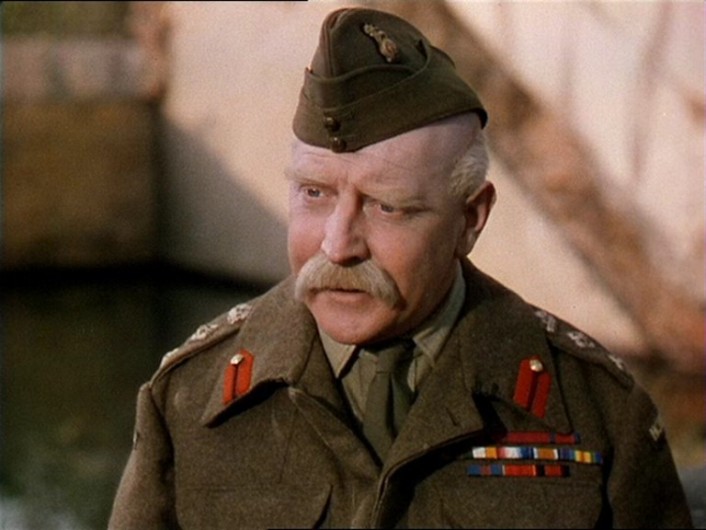
The film commences in a military training camp. It has just been announced the war is to begin at midnight. A group of young gung-ho military officers decide to cheat at war and attack the enemy before midnight. This would violate all the military rules. The troops barge into General Clive Wynne-Candy’s club where he is in the middle of enjoying a steam bath. The troops encircle him and try to take him into custody. As they do so, the General shouts about the injustice these troops are delivering. The leading lieutenant proceeds to insult the General’s large belly and ridiculous moustache. He then tackles the leading lieutenant. As he attacks, he pounces. This knocks not only him, but the lieutenant into a vast swimming pool.

We proceed into a long flashback where we watch the General slowly age. We draw comparisons to the soldiers who barged into his club and the younger version of himself.

THE CRITISCIM:
The largest theme in the film The Life and Death of Colonel Blimp is certainly the theme of time and how it passes. We observe how exactly the transformation of General Clive Wynne-Candy occurred. There are many comparisons to how people age, and how the elderly were once young and like as all. It comments on how the younger generations should truly listen to the world of the elderly as they have experienced the same things and have words of wisdom. Yet, The Life and Death of Colonel Blimp also depicts the lack of honour that was lost in the generations. Even when General Wynee-Candy was younger, he may have been playful and careless, but he still lived by a code of honour. This concept of honour is lost among the young soldiers he sees in modern time. All of this is demonstrated to evoke the realistic life of General Wynee-Candy. This is a fabulous character analysis. Perhaps the deepest The Life and Death of Colonel Blimp gets is with his love life. The General is blinded by his love for a woman he met at the very beginning of the film. In his search for another woman who may perhaps act as a double for her, he stumbles into a metaphorical blindness. This theme is perhaps overdone when Deborah Kerr plays the other woman in the General’s life. This was a creative idea, but the multiple character aspect was slightly too overt for my liking.

Each frame of The Life and Death of Colonel Blimp is dealt with fabulous acting. Overall, the film is embellished in all-around solid acting. However, many may consider Roger Livesey to be the highlight of the film’s acting. I would personally beg to differ. The highlight of the film’s performances, for me, was with Deborah Kerr. She took on the challenge of pulling the strings between her multiple characters to have a compilation of necessary recurring details while making them unique enough to fully notice a difference among her characters. She clearly comprehended the essence of her character and her essential role to play with the character of General Clive Wynee-Candy. To speak frankly, The Life and Death of Colonel Blimp would have failed to live on as it did if I were not for Deborah Kerr.

Yes, The Life and Death of Colonel Blimp is another example of what a big budget in the hands of Michael Powell and Emeric Pressburger can get you. The film requires an elegant array of upper-class costumes. These costumes were perfectly selected to better match the characters and style in the film. On a similar note, the extravagant sets in the upper-class settings were extremely fitting. It is nearly impossible to create a film on such large a scale without the usage of humongous sets. In the state of mind, The Life and Death of Colonel Blimp nails it.

In this film, Powell and Pressburger demonstrate their skill of physically positioning characters. I mean to speak of how exactly they have their actors positioned in separate angles and positions. The characters are layered in their positions and constantly are carefully placed in unique directions of the screen. I mean to explain how one character may be leaning against a wall at the back of the frame while another stands directly before the camera. This creates a layered effect that resonates throughout. However, I did notice one major fault in the direction of Powell and Pressburger. The Life and Death of Colonel Blimp suffers from camera angles and camera movements that are in no way innovative, or interesting for that matter. They knew how to use Technicolor, so they figured that they wouldn’t need to know how to use the camera to its best possible potential. I mean to speak of the manner in which the camera sits before the characters in close-ups and then cuts to a long shot. The camera only pans and never considers moving in any other motion. Using the camera was not exactly Powell and Pressburger’s strong suit.
There are many people who find The Life and Death of Colonel Blimp boring. I would not go to such extremes in any long shot, but The Life and Death of Colonel Blimp is slow at times. In an attempt to give us the full pictures of the General, the directors went overboard and gave us a little too much. This resulted in a fraction of our attention to be lost somewhere in the second third.

But The Life and Death of Colonel Blimp never delivers and drastic disappointments. After completing the film I found myself deeply satisfied with its ranking as a cinema classic.

The Life and Death of Colonel Blimp,
1943,
Directed by Michael Powell and Emeric Pressburger
Starring: Roger Livesey, Deborah Kerr and Anton Walbrook
8/10 (A-)

Ranked:
1. The Life and Death of Colonel Blimp
2. The Tales of Hoffman

Saturday, 9 March 2013

The Tales of Hoffman (1951)

THE FILM:
The Tales of Hoffman was first started when Michael Powell heard Thomas Beecham playing piano and singing all the parts. It was then Powell realized he should make "The Tales of Hoffman" into a movie. As I have watched a few Powell and Pressburger films I have learned they are obsessed with the upper-class. Observe The Red Shoes, The Life and Death of Colonel Blimp, and The Tales of Hoffman. There is something within the lives of the rich that they seem so interested in. The Tales of Hoffman is not their most popular film, but it is among their greatest.

"The Tales of Hoffman" was an opera originally preformed in 1981. Powell and Pressburger have a vast taste in art, and it is clear they are a big fan of Broadway shows. They were very fond of the opera, and were very careful to be faithful. However, since The Tales of Hoffman was created primarily for an English-speaking, therefor the language of the opera needed to be changed. At times the lyrics don't seem quite write, but if you put that aside - you will enjoy the film.

I believe the main reason The Tales of Hoffman was made was to go behind the stage. When you watch an opera you sit in a far seat on a stage. However in The Tales of Hoffman we move around as the character are restrained to one small stage.

THE PLOT:
Hoffman is an elegant and handsome poet. One day he goes to see his new love, Stella preform in a ballet. After the ballet he goes to a tavern and recounts the stories of his failed attempts at love. There are several distinct and bizarre reasons for these failed attempts. For example, one of the women he loved was revealed to be simply a mechanical doll.

Hoffman soon learns that there is more than just misfortune responsible for these failure with love. In fact, there may be an evil presence seeking vengeance against Hoffman.

THE CRITICISM:
Everyone who has watched a Powell and Pressburger film is familiar with their usage of Technicolor. It is not used with more skill in The Tales of Hoffman, but I believe it fits the story more. Powell and Pressburger's theory on the use of colour was that it should be used if they had enough money in their budget. This at times lives us with a film that does not benefit from Technicolor, such as The Life and Death of Colonel Blimp. However, The Tales of Hoffman uses colour to make people, objects and scenes go beyond reality into a realm of dreams. That is perfectly suited for the plot and style of The Tales of Hoffman.

Whenever there was a close-up on a character in The Tales of Hoffman I felt very distracted. Powell and Pressburger give the direction to slobber their actors and actress in make-up to the point when they look like cartoon characters. This is especially strange considering this is completely unnoticeable in the long shots.

The Tales of Hoffman is filled to the very peak with extravagant and luscious costumes. Overall, they contributed to the fantasy of the story. However, in a large-budget Powell and Pressburger film, what can you expect? I would have disappointing if the costumes were a little less than they were. Yet, they were still very impressive.

A majority of the actors and actresses in this film act as if they were in a silent film. That statement may seem as if it were positive... so let me elaborate. When the characters in silent films over acted to demonstrate their emotions it was done for a reason, to convey the characters feelings when they could not say "Gee... I'm hungry." However, The Tales of Hoffman is not a silent movie. Although all the dialogue is through song, the words convey their characters thoughts perfectly. There was no need for this over-expression of emotion.

I have a problem with the casting in The Tales of Hoffman. As we learned in this film and even before in The Red Shoes, Moira Shearer is a fabulous dancer. She is also a marvelous actor. However, she is not a beautiful singer. In order to adapt "The Tales of Hoffman" there is a certain kind of voice that is required. Moira Shearer does not have this voice. In fact, it is my belief that she was hired because of her other contributions with Powell and Pressburger. They most likely had a good relationship since 50% of the films she acted in were Powell and Pressburger films.

There are several overlapping themes in Powell and Pressburger films. Once I noticed after I watched The Tales of Hoffman was how the two filmmakers enjoy drawing comparisons between two characters by having two separate actors or actresses play them. In The Tales of Hoffman Moira Shearer plays Stella, Hoffman's current love and Olympia, one of his loves. However, like all Powell and Pressburger films there is one film where a current theme in used best. This is The Life and Death of Colonel Blimp were Deborah Kerr plays several of Colonel Blimps lovers.

At this point I have neglected to mention one of the most jaw-dropping aspects of the film. The Tales of Hoffman contains beautiful styles of dance. I am no expert dance, in fact I cannot even point out what was good about it, I can just tell you there was a great deal of dancing talent within the cast.

Powell and Pressuburger are more concerned with style over film making with The Tales of Hoffman. There is not a single unique camera angle or camera movement. The entire film is practically a compilation of long-shots, mid-shots and close-ups. The Tales of Hoffman positions it's camera and makes us watch with no personality of the camera.

My final point is about the transition of a stage opera to a film opera. If you are an opera fan, I suggest watching the opera over seeing the film. There is a stage presence that can only be captured on stage. There is a feeling of seeing live humans preform the art that can never be captured on camera.

Powell and Pressuburger's The Tales of Hoffman misses greatness but certainly dwells as a 'good' film that uses elements we've seen before in their films.

The Tales of Hoffman,
1951,
Directed by Michael Powell and Emeric Powell,
Starring: Moira Shearer, Robert Helpmann and Robert Rounseville
7/10 (B-)

Ranked:
1. The Tales of Hoffman

Tuesday, 19 February 2013

Prolouge

Prologue to a Project: a project for Cinema Stripped Down

For years, two men have left the world mind-boggled over one thing. That one thing, was colour. Emeric Pressburger and Michael Powell have been able to use colour like no other to create dreamlike segments. But it is not only their colour films that are good, we will seen if there is more to them than just great usage of colour when we watch and review every Emeric Pressburger and Michael Powell film.

Because Powell and Pressburger have some dificult films, their filmography have been divided among Wilbert Takken and Timothy Andersson.

Here is their complete filmography:
*NOTE: We are only doing the films they did together.

The Spy in Black, 1939 Wilbert Takken
Contraband, 1940 Timothy Andersson
49th Parallel, 1941, Timothy Andersson
One of Our Aircraft is Missing, 1942 Wilbert Takken
The Life and Death of Colonel Blimp, 1943 Wilbert Takken
A Canterbury Tale, 1944 Timothy Andersson
'I Know Where I'm Going', 1945 Wilbert Takken
A Matter of Life and Death, 1946 Wilbert Takken
Black Narcissus, 1947 Timothy Andersson
The Red Shoes, 1948 Wilbert Takken
The Small Back Room, 1949 Timothy Andersson
Gone to Earth, 1950 Wilbert Takken
The Tales of Hoffman, 1951 Wilbert Takken
The Battle of River Plate, 1956 Wilbert Takken

We hope you decide to watch along with us!